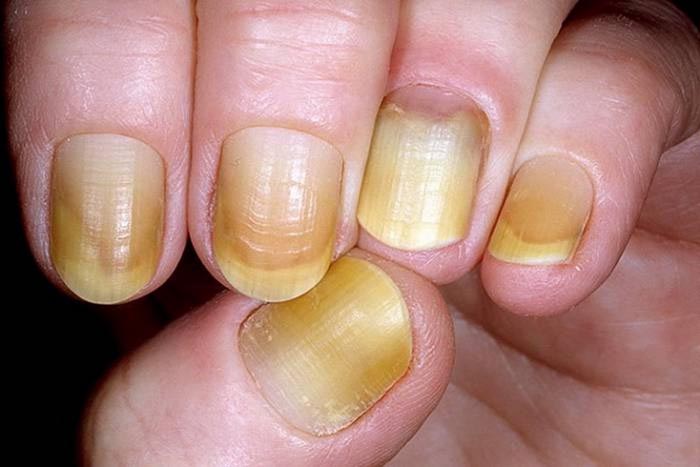
Yellow nail syndrome is a condition that affects the fingernails and the toenails. Those who suffer from yellow nail syndrome often also suffer from lymphoedema as well. In fact, yellow nail syndrome is often associated with other diseases and viruses like pleural effusions and bronchiectasis. While this is an issue that mostly affects adults, children can also suffer from yellow nail syndrome. Yellow nail syndrome can cause nails to look downright unsightly. This condition can cause social stigma and cause low self esteem due to the embarrassment. There is not a known cause of yellow nail syndrome, but it has been linked to affect those who suffer from conditions like rheumatoid arthritis, immunodeficiency, and even sinusitis.
Main Features And Symptoms of Yellow Nail Syndrome
- Disrupted Nail Growth. If your fingernails or toenails begin to grow at an usually slow rate or if they stop growing all together, this could be a symptom of yellow nail syndrome.
- Thicker Nails. Yellow nail syndrome also can cause the toenails to become thicker over the course of time. The nails can also also lose some of their cuticles. Yellow nail syndrome can cause the fingernails and toenails to experience ridges and bumps. While they may still appear smooth, they will be bumpy to the touch.
- Change In Color And Appearance. Yellow nail syndrome stays true to it’s name. It can cause nails to appear yellow or even green. The outside of the nail often a darker color than the rest of the nail.
- Swelling. Yellow nail syndrome can cause swelling in the fingers, toes, and even the legs. In fact, the legs are the areas that are most likely to experience swelling due to yellow nail syndrome.
- Nail Separating From The Nail Bed. Yellow nail syndrome can cause the nails to separate from the nail beds. Not only can this be rather painful, it can also be very unattractive.
Treatment Options For Yellow Nail Syndrome
- Topical Vitamin E Treatment. Most of the time the changes to the toenails and fingernails due to yellow nail syndrome are permanent, but some people have had their nails return to their normal appearance. Applying a topical vitamin E ointment can help the nails thrive and increase the chance of normal nails.
- Zinc. Taking zinc supplements has also been associated with helping to treat yellow nail syndrome, but it is not clear why zinc is effective.
- Oral Antifunal Agents. Although yellow nail syndrome is not a fungal infection, oral antifungal agents have been proven to be effective in treating the visible symptoms of yellow nail syndrome. These agents have been linked to speeding up the nail growth process.
- Seek Medical Care. If patients are experiencing respiratory symptoms of yellow nail syndrome or complications from the diseases it is linked to, they should seek the help of a medical professional as soon as possible.
Those who are currently suffering from yellow nail syndrome should not feel ashamed because it is a fairly common problem for adults and even a few children.
References