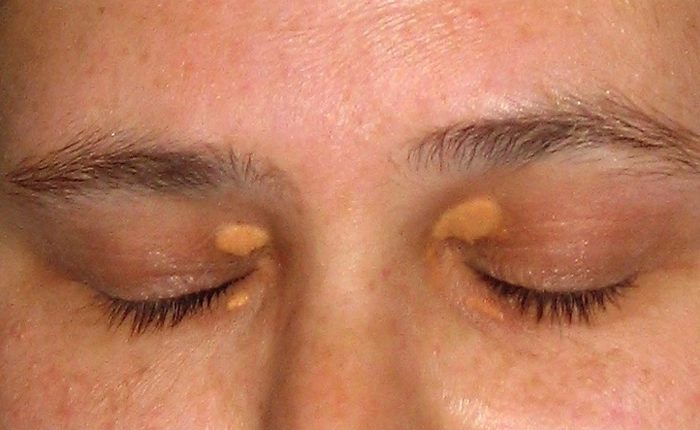
Xanthelasma and xanthoma are skin conditions where fat is deposited under the surface of the skin. Tiny (1-2 mm) yellowish plaques that are slightly raised on the skin surface of the upper or lower eyelids.
Causes of Xanthelasma
Xanthelasma is caused by tiny deposits of fat in the skin and is often associated with abnormal blood fat levels (hyperlipidemia).
Symptoms of Xanthelasma
Skin lesion or bumps under the skin (nodules) with a flat surface, soft to the touch, yellow color, sharply defined margins (sharp, distinct borders).
Diagnosis
The diagnosis is primarily on how the skin growth looks, especially if there is a history of an underlying disorder. A biopsy of the growth will show a fatty deposit.
Treatment
Laser, excision, electrodesiccation, or topical application of trichloroacetic acid. Recurrences are not uncommon.
References